
 2026.06.19
 Industria News
The most common connection methods for HDPE Electrofusion Fittings are electrofusion welding, butt fusion welding, socket fusion welding, and mechanical compression fittings. Among these, electrofusion welding is the dominant method used in pressurized pipeline systems — including gas distribution, water supply, and industrial drainage — because it produces a joint as strong as or stronger than the pipe wall itself, with no reliance on adhesives, solvents, or external clamps. Understanding when and why each method is used helps engineers and installers select the right connection for each application.
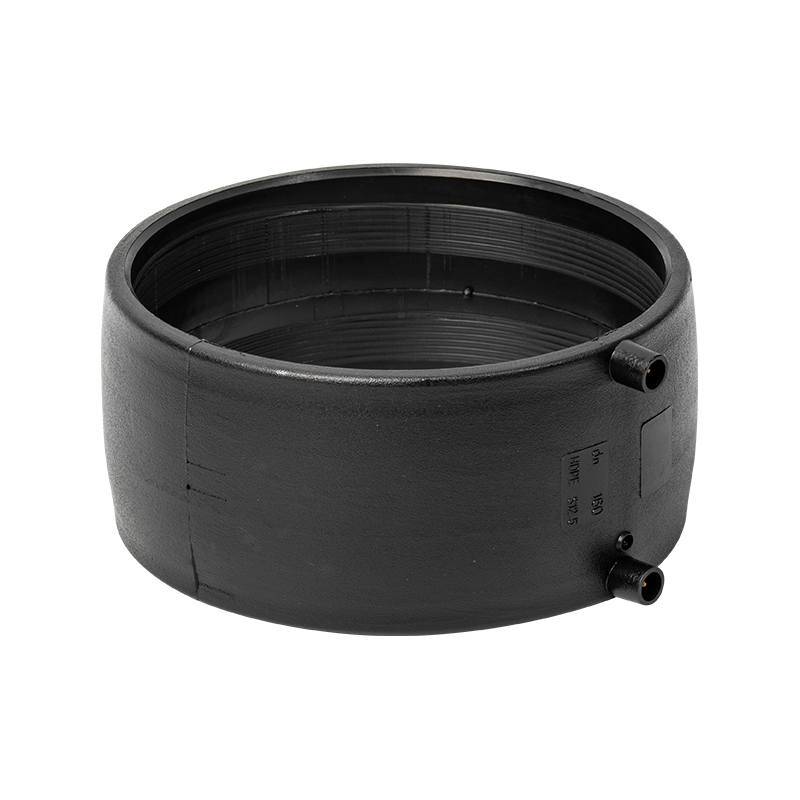
Electrofusion welding is the defining connection method for HDPE Electrofusion Fittings. The fitting contains an embedded resistance wire coil. When an electrofusion controller passes a precisely controlled electrical current through the wire, the wire heats to between 200 and 250 degrees Celsius, melting the HDPE at the interface between the fitting and the pipe. The two surfaces fuse into a homogeneous bond as the material cools under controlled pressure from the pipe's thermal expansion within the fitting. (Source: ISO 11414:2009, Plastics Pipes and Fittings — Preparation of Polyethylene Pipe and Electrofusion Fittings for Welding)
A correctly made electrofusion joint achieves a tensile strength equivalent to 100% of the parent pipe material. In destructive testing, a properly fused joint will fail in the pipe body, not at the fusion zone. This is verified under ISO 13954 and ISO 13955, which govern the peel decohesion and tensile testing of electrofusion joints respectively. (Source: ISO 13954:1997 and ISO 13955:1997, Plastics Pipes and Fittings — Tests for Electrofusion Assemblies)
This makes electrofusion the only connection method where joint integrity genuinely matches the pipe's own pressure rating — critical for gas pipelines, potable water mains, and industrial process piping operating at sustained pressure.
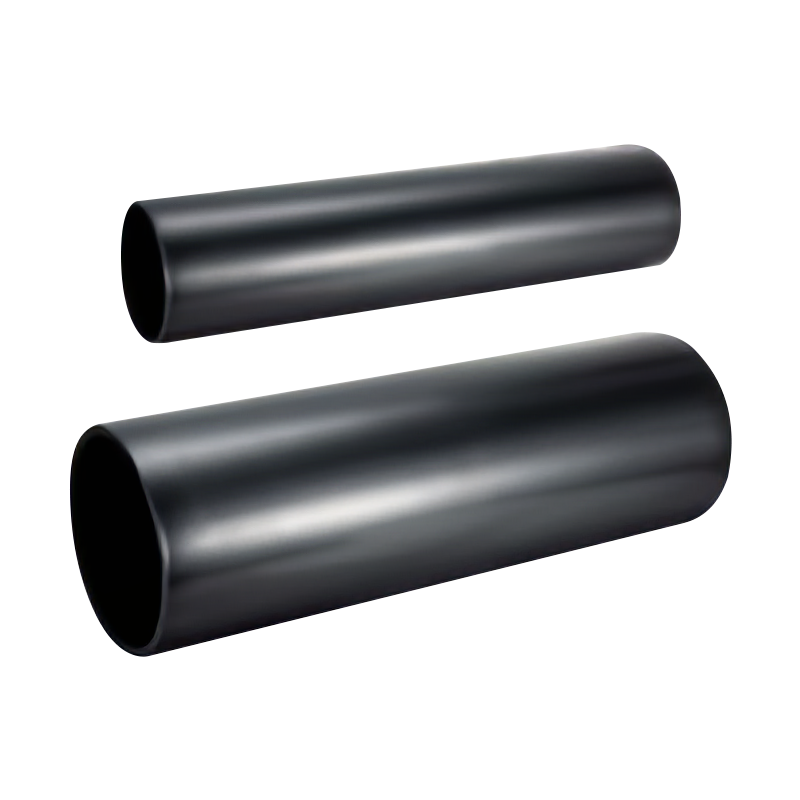
Butt fusion welding is the second most widely used method for joining HDPE pipe, and is preferred for pipe diameters above 110 mm where electrofusion fittings become significantly more expensive. In butt fusion, the pipe ends are heated simultaneously against a flat heating plate at 200 to 220 degrees Celsius until a melt bead forms, the heater is removed, and the pipe ends are pressed together under controlled force to form a homogeneous weld bead. (Source: ISO 21307:2017, Plastics Pipes and Fittings — Butt Fusion Jointing Procedures for Polyethylene)
Butt fusion machines require the pipe to be aligned in a rigid frame, with access to both pipe ends simultaneously. This makes it impractical in confined spaces, in live trenches, or when joining pipe to an existing fitting in a tight access pit — exactly the conditions where electrofusion excels. In these scenarios, electrofusion fittings are always the preferred solution regardless of pipe diameter.
Socket fusion is used primarily for HDPE pipe diameters up to 63 mm in low-pressure domestic and light industrial applications. The pipe end and socket of the fitting are simultaneously heated on a spigot and socket tool, then quickly assembled before the molten surface cools. The joint relies on the softened HDPE surfaces flowing together under manual insertion pressure.
Socket fusion is faster and requires simpler equipment than electrofusion, making it cost-effective for small-bore irrigation, drainage, and plumbing systems. However, it is not approved for gas distribution or high-pressure water mains because joint quality is more operator-dependent and less consistent than electrofusion. (Source: ASTM F1056, Standard Specification for Socket Fusion Tools for Use in Socket Fusion Joining Polyethylene Pipe)
Mechanical compression fittings for HDPE pipe do not involve heat or fusion. Instead, a compression ring and nut apply radial clamping force around the pipe, creating a seal and mechanical retention without altering the pipe material. These fittings are used where:
Mechanical fittings are not considered equivalent to fusion joints for permanent infrastructure and are excluded from most gas and potable water main specifications that require a fully homogeneous joint.
| Connection Method | Joint Strength | Pipe Size Range | Equipment Needed | Best Application |
|---|---|---|---|---|
| Electrofusion Welding | 100% of pipe rating | 20 mm to 1200 mm | Electrofusion controller, scraper, clamp | Gas, water mains, confined spaces, repair |
| Butt Fusion Welding | 100% of pipe rating | 63 mm and above | Butt fusion machine, trimmer, heater plate | Large-diameter straight pipe runs |
| Socket Fusion Welding | High (operator dependent) | Up to 63 mm | Socket fusion tool set | Small bore irrigation, drainage, plumbing |
| Mechanical Compression | Up to 10 bar typical | 16 mm to 315 mm | Spanner only | Temporary joints, multi-material connections |
Electrofusion fittings have become the standard in gas distribution and potable water infrastructure for three reasons that no other method fully addresses:
Pipeline repair work, service connections, and valve insertions frequently require jointing in conditions where a butt fusion machine cannot be set up — inside existing valve pits, in live wet trenches, or adjacent to existing services. Electrofusion fittings require only enough space to slide the pipe into the socket and clip on the controller leads. The UK Water Industry Research (UKWIR) found that electrofusion accounted for over 85% of all repair and service connection joints on plastic water mains in the UK precisely because of this access advantage. (Source: UKWIR, Code of Practice for the Civil Design of Below Ground Water Infrastructure, 2019)
Modern electrofusion controllers read the fitting's barcode automatically and log the fusion parameters — voltage, current, fusion time, ambient temperature, and operator ID — to a digital record. This traceability means every joint in an infrastructure project has a documented quality record that can be audited. No other connection method produces this level of automated quality assurance without additional inspection equipment.
Electrofusion fittings manufactured to ISO 8085-3 are compatible with PE80 and PE100 pipe from any conforming manufacturer, covering SDR11, SDR17, and SDR26 pressure classes. This material flexibility makes them the universal joint solution across multi-source supply chains where pipe from different production runs must be connected in the field. (Source: ISO 8085-3:2001, Polyethylene Fittings for Use with Polyethylene Pipes for the Supply of Gaseous Fuels)
The electrofusion process produces a consistent high-quality joint only when these preparation steps are correctly executed. Failure in any one step is the leading cause of joint defects in field installations:
Beyond gas and potable water, electrofusion connection methods are increasingly specified in industrial drainage, stormwater management, and siphon roof drainage systems where the leak-free, root-resistant, and chemically inert properties of HDPE are required over long service lives of 50 years or more.
In siphon drainage systems, the pipeline operates under negative pressure and high flow velocities — conditions that place sustained dynamic stress on joints throughout the system's operating life. The homogeneous joint produced by electrofusion welding is the only connection type that maintains full structural integrity under these combined pressure and velocity cycles without requiring periodic inspection or re-tightening.
The Heqi PE Siphon Drainage Pipe Series is engineered for exactly these demanding conditions, using HDPE pipe and electrofusion-compatible fittings that meet the structural and chemical resistance requirements of large-scale roof drainage, industrial effluent, and stormwater infrastructure. Their systems are designed for long-term performance in applications where joint integrity is critical to the entire drainage function.
| Scenario | Recommended Method | Reason |
|---|---|---|
| Gas distribution main repair | Electrofusion | Mandated by gas utility standards; confined trench access |
| New large-diameter water main, open trench | Butt Fusion | Lower cost per joint at large diameters; good access |
| Service connection to existing main | Electrofusion saddle | No pipe cutting; clamps to existing pipe in live conditions |
| Small bore irrigation system | Socket Fusion | Low pressure; simple tooling; fast assembly on small sizes |
| Emergency repair, no power available | Mechanical Compression | No energy source required; immediate installation |
| Siphon drainage system | Electrofusion | Full joint strength under negative pressure and flow cycles |
| Connecting HDPE to existing steel pipe | Mechanical Flange Adapter | Fusion not possible across different materials |
The core principle: use electrofusion wherever joint integrity, access constraints, or system pressure demands the highest reliability. Use butt fusion where pipe diameter makes electrofusion uneconomical and access is unrestricted. Use socket fusion and mechanical methods only where pressure and criticality allow lower-specification connections.
Commendatur Products
News and information
2026-05-08
Quid melius est, HDPE siphonis fistulae vel tibiae PVC?
2026-04-30
Quae sunt commoda PE calido liquescente tibia caerimonias?
2026-04-24
Quid est lamina inscensio?
2026-04-17
Quid est PE calidum liquescere fistulam decet?
2026-04-10
Quod melius est: PE candentis candentis fistulae liquescentiae vel instrumenta calida HDPE?
 General Manager Mr.Song +86-18868665013 / Miss Zhou +86-13757458992
 International Sales Manager: Jim Yao +86-18968349877
 +86-574-62939789
 Wechat/WhatsApp: +86-18968349877
 [email protected]; [email protected]
 147 Dushan, Sanqi Urbs, Yuyao urbs, Zhejiang Province
Copyright © Ningbo Heqi Pipe Co., Ltd. All rights reserved. Lupum INCILE Pipes Manufacturer INCILE Fittings Supplier



 EN
EN

 русский
 Français
 日本語
日本語 한국어
한국어 Latine
 Tiếng Việt
 বাংলা
বাংলা ไทย
ไทย عربى
عربى Hrvatski
 čeština
 Nederlands
 dansk
dansk Pilipino
 Suomalainen
 Deutsch
 Magyar
 Indonesia
 italiano
 Gaeilge
 Bahasa Melayu
 فارسی
فارسی norsk
norsk Polskie
 Português
 Română
 Español
 Slovák
 svenska
 Türk
Türk